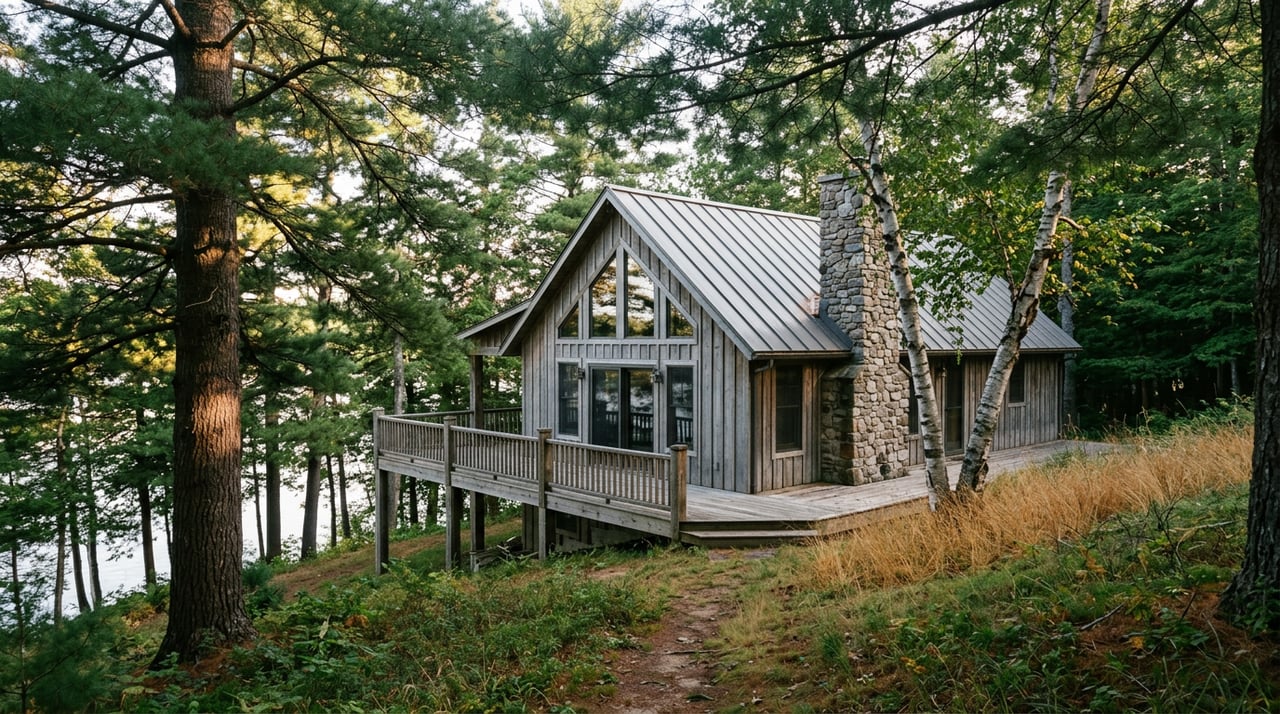
Four months after closing on a 1970s cabin on one of Vilas County's smaller lakes, a new owner opens a letter from the county Zoning and Sanitary office. It is not a welcome packet. It is a notice that the property's septic system has not been serviced within the mandated window, and that a citation is coming if it isn't addressed. The buyer's first reaction is confusion. They just bought this place. Shouldn't the clock have started over?
It didn't. And that single fact, more than any square footage or lake frontage number, is the thing a buyer or seller of an older Vilas County lake property needs to understand before signing anything. Closing day changes who holds the deed. It does not touch the property's compliance history, its footprint rights, or what kind of water access actually came with the parcel. Those three things ride with the land, not with the transaction.
The septic clock never paused for the sale
Vilas County has more than 24,000 private onsite wastewater treatment systems, commonly called septic systems, and every one of them is on a mandatory three-year inspection and pumping cycle regardless of whether the home is lived in year-round or opened for six weeks in July. The county's Zoning and Planning Department runs this as a standing maintenance program, not a point-of-sale checkpoint. Reminder cards go out every April, with a second round in September, and property owners who fall behind get cited.
That distinction matters more than it sounds like it should. In states with a point-of-sale septic law, the transaction itself forces the issue: no inspection, no closing. Vilas County doesn't work that way. The three-year cycle keeps running whether a property changes hands or not, which means a buyer can close on a cabin whose maintenance card lapsed under the previous owner and inherit that lapse along with the keys. The compliance obligation didn't reset because ownership did. It just changed whose name is on the citation.
The upside is that this status isn't a mystery. Vilas County tracks every POWTS permit and maintenance record through its Ascent Permit Management Program, and a buyer's agent can check a property's sanitary maintenance history before an offer goes in, the same way a title search checks for liens. Asking the seller when the tank was last pumped is a reasonable question. Pulling the county record is a better one, because it tells you what the county already knows and what's coming due regardless of who owns the place on the day the letter arrives.
The setback line was fixed before either of you were involved
Wisconsin's shoreland zoning standard, set at the state level under NR 115.05, requires new construction to sit at least 75 feet back from a lake's ordinary high water mark. Most of the older lake cabins across Vilas County predate that standard, which makes them legally nonconforming rather than illegal. That word, nonconforming, does a lot of quiet work in a real estate transaction, because it defines exactly what a new owner can and cannot do with a structure that's already closer to the water than current rules would allow.
A nonconforming lake home can be maintained, repaired, and even rebuilt in place, as long as the work doesn't expand the existing footprint. Beyond that baseline, state rules carve out two specific allowances. A structure sitting at least 35 feet from the water can add up to 200 square feet of lateral expansion, but that number is a lifetime cap on the structure, not a per-owner allowance that refreshes with each sale. If a previous owner already added a mudroom or a bump-out under that allowance, the remaining room to expand is whatever's left of the 200 square feet, not a fresh 200. Vertical expansion is a separate allowance and can go up to 35 feet above grade, which is often the more realistic path for owners looking to add a second story or loft space without touching the footprint at all.
This is where a legacy family cabin and a buyer's renovation plans can quietly diverge. A family selling a grandparent's place might describe it as a home with "room to grow." A buyer walking the lot with contractor plans in hand needs to know how much of that 200 square feet is already spoken for by additions made decades ago, because that history transferred with the deed just as surely as the roof did.
What "deeded access" does and doesn't mean
The third piece is less about the structure and more about the water itself. Wisconsin law treats the right to build a pier, moor a boat, or otherwise use a lake as something that belongs to riparian land, meaning land that actually touches the water. State statute generally prohibits creating a non-riparian easement that lets a landlocked parcel exercise those rights, and Vilas County's own shoreland ordinance separately bars what's known as a dockominium, the practice of selling a boat slip or mooring site as its own unit, detached from any dwelling on the shoreland lot.
Put plainly, a listing that advertises "deeded lake access" on a lot that doesn't front the water is describing something legally narrower than waterfront ownership, and the sale itself doesn't expand what that access legally allows. If the access wasn't established as a proper riparian right before the property was subdivided, a closing doesn't create one. This is a detail worth understanding before comparing a lower-priced off-water lot with "access" to a true frontage parcel a few hundred yards down the shore road. They may look similar on a listing sheet. They are not equivalent purchases.
What actually changes at closing versus what doesn't
| Resets or transfers cleanly at closing | Carries forward regardless of sale | |
|---|---|---|
| Septic compliance | Ownership of the obligation | The three-year maintenance clock and any overdue status |
| Structure footprint | Title and possession | Nonconforming status and remaining lateral expansion allowance |
| Water access | Use of whatever rights exist | Whether the parcel is legally riparian at all |
A short due-diligence list before writing an offer
For a buyer looking seriously at an older Vilas County lake property, three questions are worth answering before the offer goes in, not after:
- When was the septic system last inspected or pumped, and is that documented in the county's Ascent system rather than just recalled by the seller
- Is the existing structure within the current 75-foot setback, and if not, how much of the 200-square-foot lifetime lateral expansion allowance has already been used
- Does the parcel itself carry riparian rights, or is any lake access on the property based on an easement or shared arrangement that predates the current non-riparian restrictions
None of these questions show up on a standard listing sheet. All three show up eventually, either in a pre-offer conversation or in a letter from the county after the fact.
Why this matters more here than in most markets
Second-home buyers often assume that closing functions like a reset button, the way it might for a subdivision home with a modern septic hookup and no zoning history to speak of. Vilas County's older lake stock doesn't work that way, and the reason comes down to what these properties are: homes built decades before current shoreland standards existed, on systems that predate the county's current sanitary program, on lots whose water rights were often established long before anyone wrote a dockominium prohibition into an ordinance. The compliance history is baked into the property in a way that a fresh coat of paint or a new kitchen doesn't touch.
That's not a reason to avoid an older lake cabin. It's a reason to know exactly what you're inheriting before you sign, because a citation, a lateral expansion limit, or a water access question is far cheaper to work through during due diligence than after the moving truck leaves.
FAQ
Does the three-year septic cycle apply to seasonal cabins that sit empty most of the year? Yes. The county's maintenance program applies to every POWTS regardless of year-round or seasonal use.
If I buy a nonconforming cabin, can I ever get it fully compliant with the 75-foot setback? Only by relocating the structure, which state rules allow under specific conditions, including a county determination that no other buildable location exists on the property and an approved mitigation plan.
Can a seller sell me a dock or mooring site without selling the adjoining home? Generally no. Wisconsin's shoreland rules bar selling a mooring site or boat slip as a standalone unit separate from a dwelling on the same shoreland lot.
If you're weighing an older lakefront property in Vilas County, whether you're the one selling a family cabin or the one trying to understand what you'd actually be buying, this is the kind of homework worth doing before an offer, not after. Kelly Cooper works this market from both sides of that conversation, buyer and steward, and is glad to talk through what a specific property's history actually allows. Let's Connect.